If you bought a home in a planned community in Florida, your property tax bill likely includes a line item that many homeowners overlook: the Community Development District (CDD) assessment. For homeowners already struggling with their mortgage, unpaid CDD fees add a layer of complexity that can make an already difficult situation more dangerous.
Unlike homeowners association dues, CDD fees are a government obligation, not a private contract. That distinction has significant legal consequences. This guide explains what CDD fees are, how they relate to foreclosure in Florida, and what you can do if you are falling behind on both your mortgage and your CDD obligations.
What Is a Community Development District?
A Community Development District is a special-purpose local government created under Chapter 190 of the Florida Statutes to finance, construct, and manage public infrastructure in a planned development. Florida has hundreds of CDDs covering communities ranging from small subdivisions to massive retirement destinations like The Villages.
When a developer creates a CDD, the district sells bonds to finance the construction of roads, water and sewer systems, drainage, parks, and community amenities. Those bonds are then repaid over 20 to 30 years through annual assessments on each lot within the district. The assessments are attached to each property and are collected by the county tax collector on the annual property tax bill.
When you buy a home in a CDD community, you assume responsibility for the remaining CDD debt on that property. The developer is required to disclose this obligation before closing, but the long-term financial impact is frequently underestimated by buyers.
How CDD Fees Become a Lien on Your Property
Each year, the CDD levies an assessment against every property in the district. If you do not pay the assessment by the statutory deadline, the unpaid amount becomes a lien on your property. Because CDD assessments are a government obligation created by statute, this lien has characteristics similar to a property tax lien.
The lien can survive the sale of the property in many circumstances, and it can be enforced through foreclosure separate from any action your mortgage lender takes. A buyer who purchases your home at a mortgage foreclosure auction may still owe any surviving CDD lien balance, which is why experienced real estate attorneys and title companies carefully review CDD obligations during any Florida property transaction.
For a broader look at how multiple liens on a Florida property interact, see the comparison of HOA versus mortgage foreclosure in Florida and the related guide on what happens to HOA dues after a Florida foreclosure.
CDD Foreclosure vs. Mortgage Foreclosure
Many Florida homeowners are surprised to learn that a CDD can foreclose on their property independently of their mortgage lender. If you fall behind on CDD assessments, the district can initiate a foreclosure lawsuit in the circuit court of the county where the property is located, just as a mortgage lender can. Florida is a judicial foreclosure state, meaning any foreclosure requires a court order, including CDD foreclosures.
A CDD foreclosure can proceed even if:
- Your mortgage is current and your lender has not taken any action
- Your mortgage lender is already in the middle of a separate foreclosure case
- You are in active negotiations with your mortgage servicer for a loan modification
The two legal proceedings are separate. If the CDD obtains a foreclosure judgment and the property is sold at auction, the proceeds are applied to satisfy the CDD lien. Depending on lien priority, your mortgage lender may or may not be made whole from the sale. The same property can become entangled in two simultaneous foreclosure lawsuits with different plaintiffs.
How CDD Fees Are Handled in Mortgage Escrow
Whether your lender escrows your CDD assessment depends on the lender and your loan documents. Because CDD assessments appear on the county property tax bill, some mortgage servicers collect them through the escrow account along with property taxes. Others do not, particularly if the assessment amount changes year to year.
If your lender is escrowing your CDD assessment, a shortfall in the escrow account will cause your monthly payment to increase when the servicer recalculates the escrow balance. If your lender is not escrowing the CDD amount, you are solely responsible for paying it directly to the county by the statutory deadline.
Review your annual escrow analysis statement and your county tax bill carefully. If you are unsure whether your lender is covering the CDD assessment, contact your servicer directly and confirm it in writing. If your escrow shortage has caused your monthly payment to jump, see the related guide on Florida escrow shortages and why your mortgage payment increased.
CDD Fees in Florida Communities
CDDs are found throughout Florida, with the highest concentrations in master-planned and age-restricted communities. Common examples include:
- The Villages (Sumter, Lake, and Marion Counties) - the largest retirement community in the United States, served by multiple CDDs
- Lakewood Ranch (Manatee and Sarasota Counties) - a large master-planned community with numerous CDD districts
- Nocatee (St. Johns County) - one of the fastest-growing communities in the country, with active CDDs
- Wesley Chapel and Land O' Lakes (Pasco County) - many newer subdivisions carry CDD assessments
- Cape Coral and Lehigh Acres (Lee County) - certain neighborhoods carry special assessment districts similar to CDDs
If you bought in a new or relatively new planned development anywhere in Florida, there is a strong likelihood that your property is within a CDD. Check your original closing disclosure or contact your county property appraiser to confirm.
What Happens to CDD Fees When You Sell Before Foreclosure
If you sell your home before either the mortgage lender or the CDD completes a foreclosure, the outstanding CDD balance is typically paid off at closing from the sale proceeds. The title company conducting the closing will obtain a CDD payoff statement, confirm the outstanding balance, and ensure the lien is satisfied so the buyer receives clear title.
This is one of the key reasons why selling before foreclosure is often the cleanest solution when a homeowner has equity. A timely sale eliminates not just the mortgage but also any attached CDD obligations, leaving you free of both debts.
If you owe more than the home is worth after accounting for both the mortgage balance and the CDD lien, a short sale may allow you to sell with lender approval and settle both debts for less than the full amount owed. Short sales in CDD communities require the title company and the lender to account for the CDD payoff in the net proceeds calculation.
Options If You Are Behind on Both Mortgage and CDD Fees
If you are struggling with both your mortgage payment and your CDD assessment, you are not alone, particularly in communities where property insurance increases, tax reassessments, and rising CDD bond rates have pushed total housing costs well above initial projections. Here are your main options:
- Contact your mortgage servicer immediately. Apply for loss mitigation options such as forbearance or loan modification. Freeing up monthly cash flow may allow you to catch up on CDD arrears before the district takes action.
- Pay the CDD assessment first if you must choose. Because CDD liens can be senior to some mortgage interests and can proceed to foreclosure independently, keeping the CDD current while negotiating with your mortgage servicer may prevent the more immediate risk of a CDD foreclosure.
- Consult a foreclosure defense attorney. An attorney can analyze the lien priority on your specific property, determine whether both the CDD and the mortgage lender could foreclose, and help you develop a strategy that addresses both obligations. See the Florida foreclosure defense overview for more.
- Consider bankruptcy. A Chapter 13 bankruptcy imposes an automatic stay on all collection actions, including CDD foreclosure, and may allow you to cure arrears on both the mortgage and the CDD assessment over a 3- to 5-year repayment plan. Whether bankruptcy makes sense depends on your full financial picture.
- Sell or short sell. If the combined debt burden is unmanageable, a sale or short sale resolves all liens at once and prevents multiple foreclosure judgments from appearing on your record.
Get Help From a Florida Foreclosure Specialist
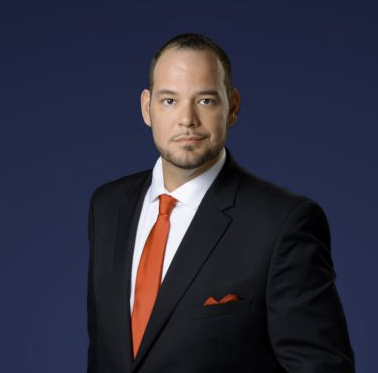
Barrett Henry is a Broker Associate at REMAX Collective with more than 23 years of real estate experience helping Florida homeowners navigate the full complexity of the foreclosure process, including communities with CDD obligations. Whether you are in The Villages, Lakewood Ranch, a Pasco County subdivision, or anywhere else in Florida, understanding the full picture of what you owe and to whom is the first step.
Direct service is available throughout Tampa Bay. For homeowners in other parts of Florida, Barrett can connect you with a trusted local specialist through a statewide referral network covering all 67 counties. Contact us today to start the conversation, with no cost and no obligation.
For free counseling resources, the U.S. Department of Housing and Urban Development maintains a directory of HUD-approved housing counselors who can help you work with your servicer and understand all of your obligations. See the resources page for more information.