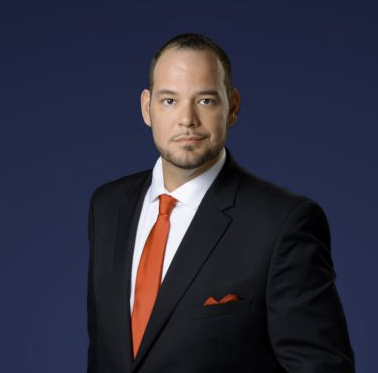
Barrett Henry is a Broker Associate at REMAX Collective with 23+ years of Florida real estate experience. He works with homeowners and families across all 67 Florida counties, including situations where an elderly homeowner with a HECM reverse mortgage has moved to a nursing home or assisted living facility and the family must determine what happens to the home.
Florida has a significant elderly population, and HECM (Home Equity Conversion Mortgage) reverse mortgages are common throughout the state. When a reverse mortgage borrower enters a nursing home or assisted living facility, the family often does not know that the loan can be called due after 12 consecutive months of absence. This guide explains the rule, exceptions, and what families should do.
The HECM Occupancy Requirement
A HECM reverse mortgage is a federally-insured loan guaranteed by the Federal Housing Administration (FHA) under 24 C.F.R. Part 206. One of the core eligibility requirements -- and a continuing obligation -- is that the property must be the borrower's principal residence. A HECM is not available for investment properties or vacation homes, and the borrower must continue to occupy the home as their primary residence after loan origination.
Under HUD guidelines (24 C.F.R. §206.55), a HECM loan becomes due and payable when:
- The last surviving borrower passes away
- The last surviving borrower sells or transfers the property
- The last surviving borrower has lived in a health care facility (nursing home, assisted living facility, hospital) for 12 consecutive months
- The property falls into disrepair and the borrower fails to maintain it
- The borrower fails to pay property taxes or maintain homeowner's insurance (tax and insurance default)
The 12-month nursing home rule is the most frequently misunderstood trigger. Many Florida families do not discover it until the servicer contacts them after the 12-month period has elapsed.
How the 12-Month Clock Works
The 12 consecutive months must be uninterrupted. If the borrower returns home even briefly -- for a visit, for a medical appointment, or to retrieve belongings -- the clock may restart depending on the facts and the servicer's interpretation.
Florida's assisted living facility (ALF) industry is large, and many Florida homeowners with HECM loans transition from their homes to Florida ALFs. The same rule applies to:
- Skilled nursing facilities (SNFs)
- Assisted living facilities (ALFs)
- Memory care units
- Inpatient rehabilitation facilities (if the stay extends past 12 months)
- Board-and-care homes where the resident no longer returns home
A hospital stay alone, without subsequent nursing home placement, would not typically trigger the rule because most patients return home. The intent of the rule is to identify borrowers who have permanently or semi-permanently relocated to a care facility and no longer use the property as a primary residence.
What Happens When the Loan Becomes Due
When the servicer determines the 12-month threshold has been reached, they issue a Due and Payable notice. This starts a repayment period during which the borrower, estate, or heirs must arrange to repay the full outstanding loan balance (principal + accrued interest + mortgage insurance premiums).
Repayment options include:
- Selling the home:The most common resolution. Sale proceeds pay off the HECM balance, and any equity above the loan amount goes to the borrower or estate. The HECM is non-recourse -- the borrower or estate is never personally liable for more than the home's value. If the home is worth less than the loan balance, FHA insurance covers the shortfall.
- Refinancing to a conventional mortgage: Technically possible but rarely practical for an elderly borrower in a nursing home who cannot qualify for a new mortgage. More applicable to situations where family members might purchase the home.
- Paying from estate or family funds: If the estate has liquid assets, the loan can be repaid without selling the home. This allows heirs to keep the property.
- Deed in lieu of foreclosure: The estate can transfer the property to the servicer in lieu of foreclosure. See our guide on deed in lieu in Florida.
If none of these options are pursued and the loan is not repaid, the servicer can initiate foreclosure through the Florida circuit courts. Florida's judicial foreclosure process typically takes 12 to 18 months, giving families additional time to respond.
Requesting Extensions
HUD guidelines require HECM servicers to consider extensions of the repayment period when borrowers, estates, or heirs are actively working toward repayment. Extensions are typically granted in 90-day increments and can be renewed multiple times if good-faith efforts are documented.
To successfully request an extension, contact the servicer in writing and:
- State the specific reason more time is needed (pending estate proceedings, pending home listing, family dispute about the property, etc.)
- Describe the specific steps being taken to resolve the loan (the home is listed for sale, an estate attorney has been retained, etc.)
- Request a specific extension period (90 days is standard)
- Confirm the property is being maintained and that taxes and insurance are current
HUD also has a Mortgagee Optional Election (MOE) assignment process that can allow the servicer to assign the loan to HUD when a non-borrowing spouse is involved and certain conditions are met, delaying foreclosure. The rules are complex; consult a HUD-approved HECM counselor.
Non-Borrowing Spouse Protections
Following litigation in the early 2010s, HUD significantly strengthened protections for non-borrowing spouses. For HECM loans originated on or after August 4, 2014:
- An Eligible Non-Borrowing Spouse (ENBS) who was married to the borrower at loan origination can remain in the home after the borrower dies, as long as they continue to meet certain conditions (property is primary residence, taxes and insurance are current, property is maintained).
- The ENBS must have been disclosed to HUD at origination and named in the loan documents.
The ENBS protections are primarily designed for the borrower's death scenario. When the borrower is still living but in a nursing home, the situation is more complex. If the non-borrowing spouse remains in the home, the occupancy requirement may be satisfied by the non-borrowing spouse's continued residence -- this is a key point to verify with the servicer and a HECM counselor early in the process.
If only the borrowing spouse is in the nursing home and the non-borrowing spouse remains in the home, the property continues to be occupied as the primary residence of a household member. Whether HUD considers this to satisfy the occupancy requirement depends on the specific loan terms and HUD guidance. Get written confirmation from the servicer.
What Florida Families Should Do Immediately
When an elderly family member with a HECM reverse mortgage enters a nursing home or ALF, families should take these steps without delay:
- Contact the HECM servicer immediately.Notify them of the move. Ask specifically whether the 12-month occupancy clock has started, and request written confirmation of the loan's status. Many families wait too long.
- Review the original HECM loan documents. Look for the specific occupancy terms, non-borrowing spouse provisions, and what constitutes a due-and- payable event under that loan agreement.
- Contact a HUD-approved HECM counselor. HUD-approved counselors are specially trained in reverse mortgage issues and can review your loan documents, explain your options, and help you communicate with the servicer. Counseling is free or low-cost.
- Maintain the property. If the home is vacant, ensure it continues to be maintained (lawn care, no leaks, no vandalism). A servicer can call the loan due for property damage or abandonment independent of the nursing home rule.
- Keep taxes and insurance current. Tax and insurance default is also an independent trigger for calling the HECM due. Set up automatic payments from estate funds if needed.
- Begin evaluating options early. The earlier families start thinking about selling, refinancing, or other repayment options, the more control they retain over the timeline and outcome.
Use our foreclosure checklist as a framework for tracking HECM-related deadlines, and see our guide on how to stop foreclosure in Florida for strategies if the loan has already been called due.
Tax Considerations When Selling a HECM Home
If the home is sold to repay the HECM balance, the estate should be aware of the tax implications. For a HECM borrower who passes away, the heirs receive a step-up in basis to the fair market value at date of death, potentially reducing or eliminating capital gains. For a living borrower, the gain may be taxable but the primary home exclusion ($250,000 single / $500,000 married) may apply if the borrower owned and used the home as a principal residence for at least two of the five years before the sale. Consult a CPA or tax attorney. See also our guide on filing taxes during foreclosure in Florida.
Related Guides
- Florida Foreclosure Process Overview
- Reverse Mortgage Foreclosure in Florida
- Deed in Lieu of Foreclosure in Florida
- Sell Your Home Before Foreclosure
- What Happens After the Foreclosure Sale
- 1099-C Tax Consequences of Florida Foreclosure
- How to Stop Foreclosure in Florida
Dealing with a reverse mortgage and a nursing home situation in Florida? Get free help today -- no cost, no obligation. We connect Florida homeowners and families with HUD-approved counselors, real estate professionals, and foreclosure attorneys in all 67 Florida counties.