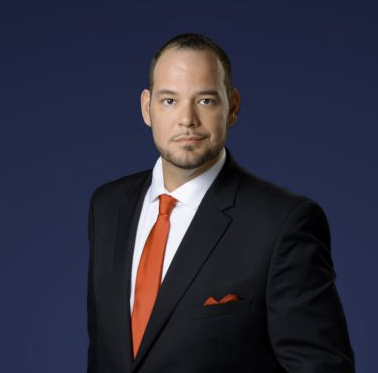
Barrett Henry is a Broker Associate at REMAX Collective with 23+ years of Florida real estate experience. He helps homeowners across all 67 Florida counties navigate foreclosure, including situations involving hard money and private lenders where the rules differ significantly from traditional bank foreclosures. Direct service in the Tampa Bay area; referral connections statewide.
Florida has a large market for private and hard money loans, used frequently by real estate investors, fix-and-flip buyers, and homeowners who cannot qualify for conventional financing. When a hard money or private loan goes into default, the foreclosure process follows Florida's judicial foreclosure law -- but with some important differences that make private lender foreclosures faster and harder to slow down than institutional foreclosures.
How Private Lender Foreclosures Differ from Bank Foreclosures
All Florida mortgage foreclosures are judicial -- meaning the lender must file a lawsuit in circuit court and obtain a final judgment before selling the property. This applies equally to banks and private lenders. There is no non-judicial or "power of sale" foreclosure in Florida for real property mortgages.
However, the regulatory protections that govern institutional lenders do not apply to private lenders:
- No 120-day waiting period -- CFPB rules (12 C.F.R. 1024.41(f)) require servicers of federally related mortgages to wait 120 days after the first missed payment before filing. Private lenders are not subject to this rule.
- No loss mitigation evaluation requirement -- banks must formally evaluate borrowers for loan modification, forbearance, and other options before and during foreclosure. Private lenders have no such obligation under federal law.
- No dual-tracking ban -- CFPB prohibits most institutional servicers from pursuing foreclosure while reviewing a complete loss mitigation application. Private lenders can pursue foreclosure and any negotiations simultaneously.
- No RESPA QWR rights -- the right to submit a Request for Information or Notice of Error under 12 C.F.R. 1024.35-36 applies only to federally related loans. Private lenders are generally exempt.
What Private Lenders Must Still Do in Florida
Despite fewer federal regulations, private lenders must still comply with Florida law. This includes:
- File a lawsuit in the appropriate circuit court
- Comply with the breach letter requirements in the mortgage itself (most Florida mortgages require a 30-day notice to cure before acceleration)
- Properly serve the borrower with a summons and complaint
- Prove standing -- that they are the holder of the original promissory note at the time of filing (F.S. 702.015)
- Record a lis pendens in the county property records
- Give proper notice of the foreclosure sale as required by F.S. 45.031
- Comply with Florida's five-year statute of limitations under F.S. 95.11(2)(c)
Violations of any of these requirements can form the basis of a defense. A foreclosure defense attorneycan review your loan documents and the lender's filings to identify defects in how the foreclosure was initiated.
Your Options When a Private Lender Forecloses
Being served with a private lender foreclosure complaint means you have a 20-day window to respond before a default judgment can be entered. Use this time wisely:
- File an Answer -- responding to the complaint preserves your rights and buys time. You can raise affirmative defenses even if you acknowledge the default.
- Evaluate a sale -- if the property has equity above the loan balance, selling before the foreclosure is often the fastest way to satisfy the private lender and preserve your equity.
- Negotiate a payoff or extension -- private lenders often prefer to be paid than to manage a foreclosure. A discounted payoff (if you can refinance or bring in a buyer) or a negotiated extension of the loan term may be possible.
- Short sale -- if the loan balance exceeds the property value, a short sale may allow the lender to accept less than full payoff and release the mortgage, often with a deficiency waiver.
- Deed in lieu of foreclosure -- a voluntary deed transfer avoids the cost and publicity of a foreclosure sale and may be attractive to a private lender who wants to move on quickly.
- Bankruptcy -- Chapter 13 stops all foreclosure immediately through the automatic stay and allows you to cure arrears over 3-5 years.
Deficiency Risk with Private Lenders
Private lenders are often more aggressive than institutional lenders in pursuing deficiency judgments after a foreclosure sale. Under F.S. 702.06, any lender -- bank or private -- has one year from the Certificate of Title to file a deficiency action. Private lenders are not bound by GSE policies that discourage deficiency collection. They also do not face the reputational costs that prevent many banks from aggressively chasing former borrowers.
Florida's FMV cap (F.S. 702.06(1)) limits deficiency to the difference between the judgment amount and the fair market value of the property at the time of the sale, not the auction price. If the home sold at auction for below market value, requesting a court determination of FMV can significantly reduce or eliminate the deficiency. A retrospective appraisal is often necessary for this argument.
Additional Resources
- Florida Foreclosure Process Overview
- Florida Foreclosure Timeline
- Florida Foreclosure Statute of Limitations
- Standing Defense in Florida Foreclosure
- How to Appeal a Florida Foreclosure Judgment
- Florida Foreclosure Survival Checklist
- Free Foreclosure Resources
Facing private lender foreclosure? Get free help today -- no cost, no obligation.