
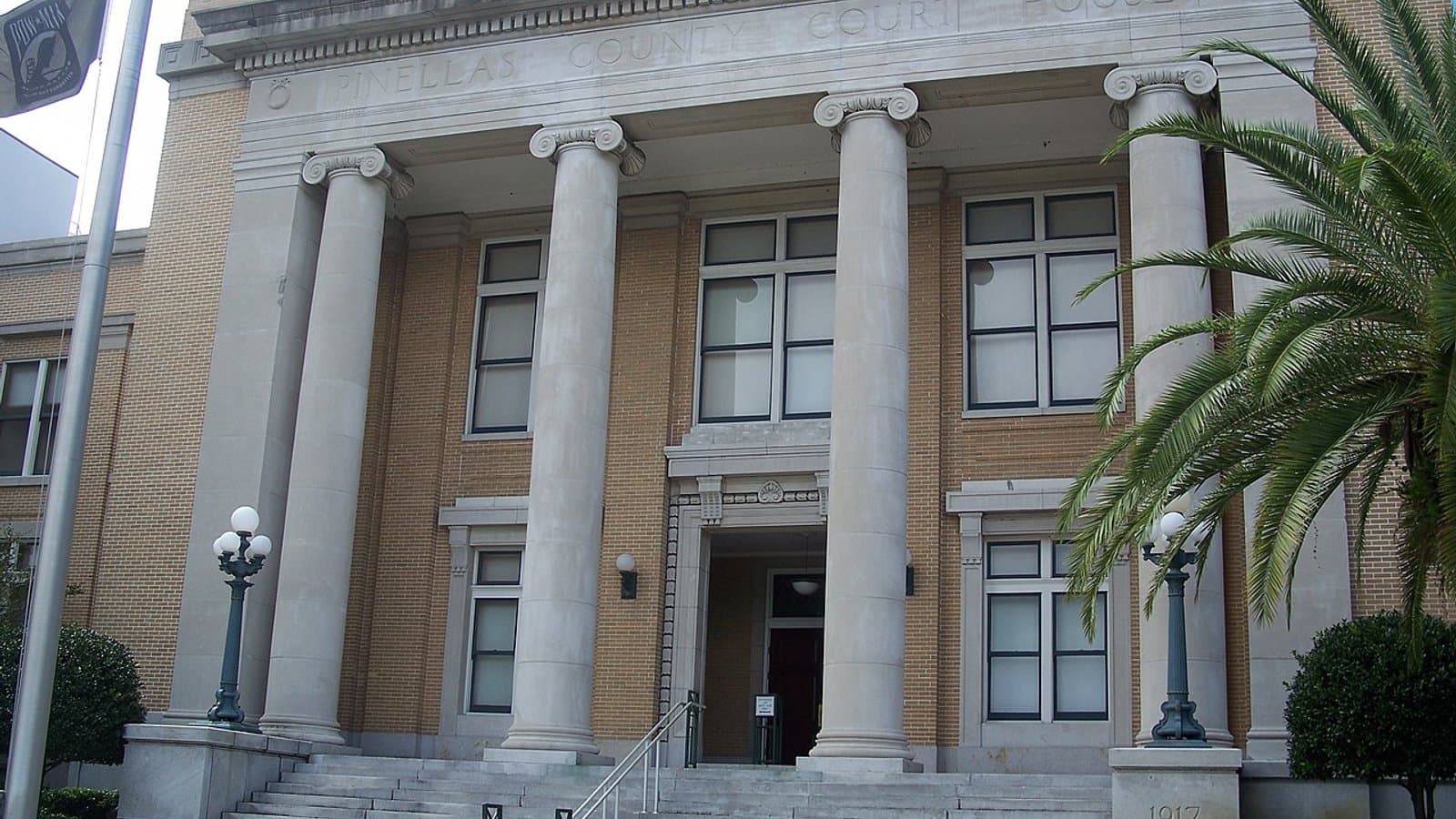
Pinellas County is the most densely populated county in Florida, and its foreclosure caseload reflects that density. If you are facing foreclosure in Pinellas County, your case will move through the 6th Judicial Circuit — a dual-county circuit that serves both Pinellas and Pasco counties. Understanding how foreclosure works locally gives you the information you need to protect your home and your rights.
This guide covers the Pinellas County foreclosure timeline, courthouse details, where to find your case records, and the options available to you at every stage of the process.
How Does Foreclosure Work in Pinellas County?
Florida is a judicial foreclosure state, which means every foreclosure must go through the court system. In Pinellas County, foreclosure cases are filed at the Pinellas County Justice Center at 315 Court St, Clearwater, FL 33756. The 6th Judicial Circuit handles all civil foreclosure actions for the county.
The Florida foreclosure process begins when your lender files a lis pendens and a foreclosure complaint with the Pinellas County Clerk of Court. You are then served with the complaint, and you have 20 days to file a written answer. Missing this deadline can result in a default judgment, which allows the lender to move directly toward a sale without a full hearing.
Because Pinellas County has a large population and a significant real estate market — covering cities like Clearwater, St. Petersburg, Largo, Dunedin, and the beach communities — the court sees a steady volume of foreclosure filings. This means hearings can sometimes be delayed due to scheduling, which extends the overall timeline.
What Is the Pinellas County Foreclosure Timeline?
The typical foreclosure timeline in Pinellas County runs 8 to 14 months from the filing of the lis pendens to the foreclosure sale. Here is a general breakdown:
| Stage | Typical Timeframe |
|---|---|
| Missed payments before filing | 3-6 months |
| Lis pendens filed + complaint served | Month 1 |
| 20-day answer deadline | Month 1-2 |
| Discovery and motion practice | Months 3-7 |
| Summary judgment hearing | Months 7-11 |
| Foreclosure sale scheduled | Months 8-14 |
If you file an answer and contest the foreclosure, the timeline extends. Contested foreclosures in Pinellas County can take 18 months to two years when defenses like lack of standing, improper notice, or violations of the CFPB mortgage protections are raised.
What Are Your Options to Stop Foreclosure in Pinellas County?
Pinellas County homeowners have several paths to stop or avoid foreclosure. The best option depends on your financial situation, how much equity you have, and where you are in the foreclosure timeline.
Negotiate a Loan Modification
A loan modificationrestructures your mortgage terms — lower interest rate, extended repayment period, or reduced principal — to make your monthly payments affordable. You can apply for a modification before or during foreclosure. Many Pinellas County homeowners successfully modify their loans through their lender's loss mitigation department.
Sell Before the Auction
Pinellas County real estate values have remained strong in most areas, which means many homeowners have equity. If you have equity, a pre-foreclosure sale lets you sell on your terms, pay off the mortgage, and walk away with any remaining funds. If you owe more than the home is worth, a short sale may be an option with lender approval.
File an Answer and Defend
Filing an answer within the 20-day deadline is one of the most important steps you can take. An answer prevents default judgment and forces the lender to prove every element of their case. Common defenses include challenging standing, demanding proof of proper assignment of the note, and asserting violations of pre-suit notice requirements.
File for Bankruptcy
Bankruptcy protection through Chapter 13 allows you to keep your home while catching up on missed payments through a court-supervised repayment plan over 3 to 5 years. The automatic stay halts all foreclosure proceedings the moment you file.
Where to Find Pinellas County Foreclosure Records
The Pinellas County Clerk of the Circuit Court maintains all foreclosure case records online at mypinellasclerk.org. You can search by party name, case number, or attorney name. The site provides access to filed documents, hearing schedules, and case status updates.
For property records, the Pinellas County Property Appraiser's website provides tax assessments, ownership history, and property details that can help you understand your property's current value — important information when evaluating your options.
Free Foreclosure Help in Pinellas County
Several organizations provide free foreclosure assistance to Pinellas County residents:
- Clearwater Neighborhood Housing Services — HUD-approved counseling for foreclosure prevention, loan modification assistance, and budget counseling.
- Community Service Foundation — Provides free housing counseling and foreclosure intervention services throughout Pinellas County.
- Gulf Coast Legal Services — Free legal representation for qualifying low-income homeowners facing foreclosure.
- HUD Housing Counselors — Federal housing counseling agencies serving Pinellas County residents at no cost.
Surplus Funds and Deficiency Judgments in Pinellas County
Two financial outcomes deserve attention beyond the foreclosure sale itself:
Surplus Funds
When a Pinellas County home sells at auction for more than the judgment amount, the excess is called a surplus. That money belongs to you -- not the lender. You must file a claim with the Pinellas County Clerk to collect it, and there is a strict deadline. Read our guide on how to claim Florida foreclosure surplus funds to understand the process.
Deficiency Judgments
If the sale price falls short of what you owed, the lender has one year from the Certificate of Title to file a separate deficiency lawsuit. Florida law caps the recovery at the difference between the judgment and the property's fair market value on the sale date -- not the auction price. See our full guide on Florida deficiency judgment protection for how this cap works and how to protect yourself.
Additional Tools for Pinellas County Homeowners
- Loan reinstatement: Reinstating your mortgage by paying all arrears in full can stop the foreclosure at any time before final judgment.
- Deed in lieu of foreclosure: Transferring the property to the lender voluntarily avoids the auction and can include a deficiency waiver and relocation assistance.
- Chapter 13 bankruptcy: Chapter 13 stops foreclosure immediately through an automatic stay and lets you catch up on missed payments over 3 to 5 years.
- Credit impact planning: Understanding how foreclosure affects your credit versus alternatives like a short sale or deed in lieu helps you make the decision that is right for your financial future.
- Lis pendens in Pinellas: The lis pendens filing is the formal start of the foreclosure lawsuit. Learn what the lis pendens means and what to do immediately after you receive one.
Related Resources for Pinellas County Homeowners
- Pasco County Foreclosure Guide -- neighboring 6th Judicial Circuit county; many Pinellas homeowners have relocated to Pasco
- Hillsborough County Foreclosure Guide -- neighboring Tampa metro county sharing the 6th Judicial Circuit
- Chapter 13 Bankruptcy to Stop Foreclosure -- automatic stay halts 6th Circuit foreclosure proceedings immediately while you catch up on arrears
- How to Claim Florida Foreclosure Surplus Funds -- file a claim with the Pinellas County Clerk within 60 days of the sale date
- Deficiency Judgments in Florida -- the one-year filing window and fair market value cap that limits your exposure
- Florida Condo Foreclosure Special Rules -- Pinellas County's high condo density means many homeowners face HOA lien and milestone inspection issues
- Florida Insurance Crisis and Foreclosure Risk -- how rising flood and windstorm insurance costs are pushing Pinellas homeowners into default
- Can I Sell My House During Foreclosure? -- your rights to sell your Pinellas County property before the auction date
What Makes Pinellas County Foreclosure Different
Barrett Henry, a REALTOR with 23+ years of real estate experience and Broker Associate at REMAX Collective, works with homeowners across Pinellas County -- from St. Petersburg to Clearwater to the barrier island communities. Pinellas County's real estate market has unique characteristics that affect foreclosure situations.
The county's limited land area (it is a peninsula) means property values tend to hold up better than inland areas, even during downturns. This often translates to more equity for homeowners, which opens up options like pre-foreclosure sales that might not be available in other counties. Condo foreclosures are also common in Pinellas County due to the high concentration of condominium communities, and HOA and condo association liens add complexity to many cases. Barrier island properties also face elevated flood and windstorm insurance costs that can push total housing payments beyond what homeowners can sustain. See our guide on the Florida insurance crisis and foreclosure risk for context.
The 6th Judicial Circuit also offers a mediation program that allows homeowners to negotiate directly with their lender in a court-supervised setting. This program has helped many Pinellas County homeowners reach agreements that avoided the foreclosure sale entirely.
Facing foreclosure in Pinellas County? Contact us today for a free consultation -- no cost, no obligation.
