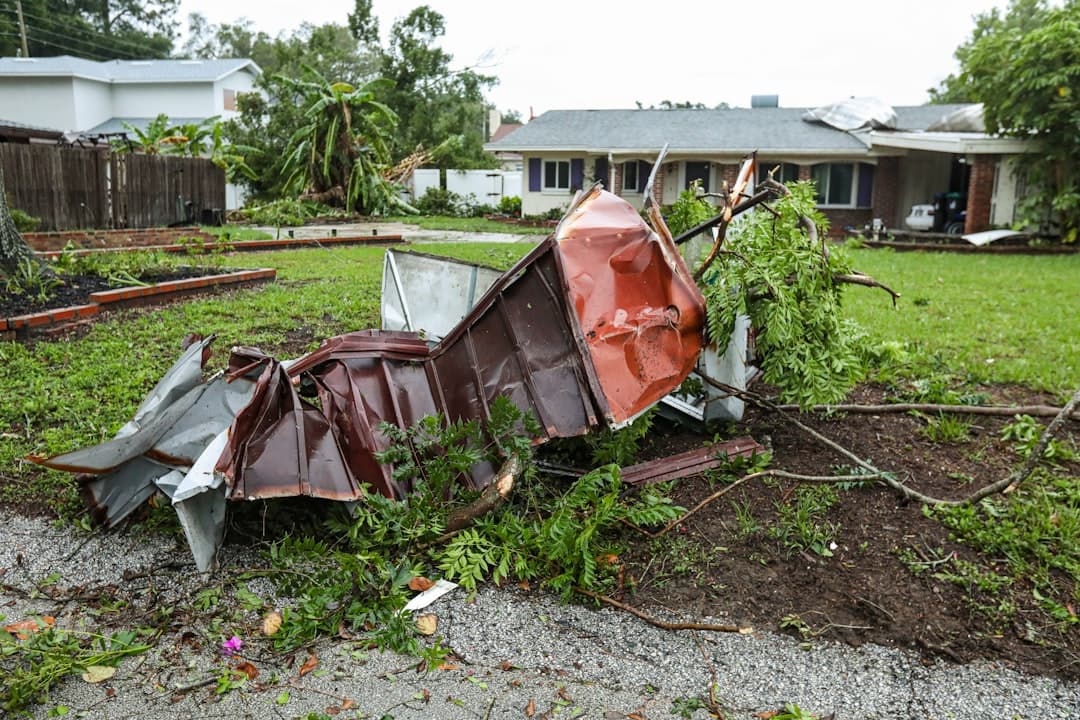
For many Florida homeowners, the road to foreclosure does not start with a missed mortgage payment. It starts with a letter from their insurance company saying a claim has been denied.
Since Florida's 2022 and 2023 property-insurance reforms — which aimed to reduce frivolous litigation and assignment-of-benefits abuse — claim denials, partial denials, and coverage disputes have become far more common. As of mid-2026, carriers are routinely citing wear, tear, deterioration, and excluded perils to reject claims that homeowners expected to be paid. The result is a growing class of Florida homeowners who are current on their mortgages, carry active insurance policies, and still find themselves financially exposed after a storm or other loss event — and one step closer to foreclosure.
Understanding how a denied claim translates into mortgage default, and what you can do to interrupt that chain, is the focus of this guide.
The Claim-Denial-to-Foreclosure Pipeline
The connection between an insurance dispute and a foreclosure filing is not obvious, but it is direct. Here is how the sequence typically unfolds:
- Event occurs. A storm, fire, or other peril damages your home. You file a claim expecting your policy to cover repairs.
- Claim is denied or severely underpaid. The insurer cites an exclusion — wear and tear, pre-existing damage, or a coverage limit that leaves a large uncovered gap. You are left with a repair bill you did not budget for.
- You cannot complete repairs. Without insurance funds, the repairs stall. Depending on the damage, the home may become less habitable and — critically — may fail to meet your mortgage servicer's property maintenance requirements.
- Policy is nonrenewed. Some carriers nonrenew policies after a claim, or after inspecting the unrepaired damage. A lapse in coverage triggers your lender's right to act.
- Force-placed insurance is imposed. When your coverage lapses, your servicer purchases force-placed insurance on the property and adds the premium — typically two to three times the cost of a standard policy — to your loan through your escrow account. Your monthly payment jumps by hundreds of dollars.
- Payment becomes unaffordable. The escrow increase pushes your total payment past what your budget can absorb. You miss a payment. Then another.
- Foreclosure proceedings begin. After a series of missed payments, the servicer refers the loan to foreclosure. At that point, the original insurance dispute feels like a distant memory — but it was the trigger.
For more on how rising insurance costs are driving Florida's record foreclosure rate, see the Florida foreclosure and insurance crisis overview and our recent breakdown of the triple-threat cost pressures driving Florida foreclosures in 2026.
Why Claim Denials Are Rising After Florida's Tort Reform
Florida's 2022 and 2023 legislative reforms were designed to address genuine abuse: inflated claims, referral kickbacks, and attorneys filing suit before allowing insurers to complete adjustments. The reforms worked in some respects — the market has stabilized enough that multiple carriers have filed rate reductions in 2026, including Citizens Property Insurance (8.7% average decrease), Florida Peninsula (8.2%), and Security First (8%). Several new carriers have also re-entered the state.
But the reforms had unintended consequences for homeowners with legitimate claims. Eliminating one-way attorney fees and restricting assignment of benefits removed financial tools that homeowners — and their contractors and public adjusters — used to challenge underpayments. Insurers, now aware that disputing a partial payment is more costly and complicated for the homeowner, have adopted denial and low-offer postures more frequently. Since the new laws took effect, more claim denials and lower initial payouts have become the default approach for many Florida carriers.
The compounding effect on the housing market is visible in Florida's foreclosure data. Florida led the nation in foreclosure rate for the first half of 2026, with 27,494 filings — a 33% increase over the same period in 2025. See the full Florida foreclosure mid-year 2026 update for the complete data breakdown.
Force-Placed Insurance: The Hidden Foreclosure Accelerator
Force-placed insurance deserves special attention because it can turn an insurance dispute into a mortgage default even without any additional stress to a homeowner's budget. Most borrowers do not realize their mortgage contract gives the lender broad authority to purchase coverage at the homeowner's expense — and the lender has no incentive to shop for the best price.
Force-placed policies often cost between two and three times what a market policy would run. On a home where a standard policy costs $3,500 per year, a force-placed policy might run $7,000 to $10,000 or more. That difference — spread across 12 months — raises the monthly payment by $300 to $550, an amount that can push a budget-conscious homeowner into delinquency within one or two billing cycles.
If you believe your lender has placed force-placed coverage unjustly or at an inflated cost, our detailed guide to force-placed insurance and foreclosure in Florida explains your rights and what you can do to challenge it. Also review our guide to Florida escrow shortages and mortgage payment increases in 2026 for the mechanics of how escrow adjustments can catch homeowners off guard.
Florida's New Dispute Path: HB 459 and What It Means for You
If your claim has been denied or severely underpaid, Florida's 2026 law — House Bill 459 — gives you a new formal channel to fight back. HB 459 replaced the prior voluntary mediation system with a mandatory dispute resolution process administered by the Division of Administrative Hearings (DOAH). Either the homeowner or the insurer can file a petition when a claim dispute cannot be resolved through direct negotiation.
Key points for homeowners under HB 459:
- The mandatory process creates a formal record that can strengthen any subsequent litigation.
- Procedural timelines are imposed on the insurer, which prevents indefinite delay.
- You do not need an attorney to file a DOAH petition, though representation is advisable if the disputed amount is significant.
- A separate proposed measure (House Bill 527) would prohibit insurers from using AI as the sole basis for denying a claim — giving homeowners an additional argument if their denial appears to have been generated by automated review.
If you are in a dispute with your insurer and also falling behind on your mortgage, it is important to pursue the insurance dispute and the mortgage hardship process in parallel — not sequentially. Waiting for the claim to resolve before contacting your servicer will cost you time and options.
What to Do If You Are Behind on Your Mortgage Because of an Insurance Issue
The following steps apply whether your situation is just starting (you received a denial and are worried about what comes next) or further along (you have already missed payments).
Step 1: File a Formal Dispute on Your Insurance Claim
Do not accept a denial as final. File a formal dispute under HB 459 with DOAH, or hire a licensed public adjuster to review the claim and negotiate on your behalf before committing to litigation. Keep all documentation: the insurer's denial letter, the adjuster's estimate, your repair contractor's quote, and any photos of the damage.
Step 2: Contact Your Mortgage Servicer Immediately
Call your servicer as soon as you realize the insurance dispute may affect your ability to make payments — ideally before you miss any payment. Explain the situation and ask about forbearance options. Federal servicing rules require your servicer to review you for loss mitigation before pursuing foreclosure, and explaining the insurance dispute creates a paper trail that supports your hardship claim. Our guide to what to do when your Florida mortgage servicer won't help walks through the escalation process if your servicer is unresponsive.
Step 3: Call a Free HUD Housing Counselor
A HUD-approved housing counselor can review your mortgage, evaluate loss mitigation options your servicer is required to consider, and guide you through any application process — at no cost to you. The national HUD hotline is 1-800-569-4287. This is particularly valuable if your servicer is difficult to reach or you are unsure which option is right for your situation.
Step 4: Explore a Loan Modification
If the escrow increase from force-placed insurance or out-of-pocket repair costs has made your monthly payment permanently unaffordable, a loan modification may restructure your interest rate, term, or principal balance to bring the payment in line with your income. For context on when modification is more appropriate than forbearance, see our guide to forbearance versus loan modification in Florida.
If you have already missed multiple payments and the loan is in arrears, reinstatement — paying the full overdue balance in a lump sum — is another way to stop the clock before a lis pendens is filed. Our guide to mortgage reinstatement to stop foreclosure in Florida explains how that process works.
Step 5: Know When Selling Makes More Sense
If the home has equity and the financial picture is unsalvageable — the repairs are too extensive, the insurance dispute is unresolved, and the mortgage is falling further behind — selling before the foreclosure sale often produces the best financial outcome. You pay off the loan from sale proceeds, avoid a foreclosure judgment on your credit, and potentially walk away with funds to start over.
Learn how that process works in our guide to selling before foreclosure in Florida and the step-by-step guide to selling before the foreclosure auction.
If you owe more than the home is worth, a short sale may allow you to exit with less credit damage than a completed foreclosure. See our comparison of short sale versus foreclosure credit impact in Florida to understand what each option costs you long-term.
Get Help Now — Before the Situation Gets Harder to Reverse
Insurance disputes and mortgage defaults are both time-sensitive. The longer either goes unaddressed, the fewer options remain. Florida's foreclosure timelines have been shortening in 2026 — lenders are now completing cases faster than at any point since 2013. For a full overview of your rights and options, start with the guide to stopping foreclosure in Florida.
Barrett Henry, REALTOR®, works directly with Florida homeowners in distress — from evaluating your equity position and running the numbers on a pre-foreclosure sale to connecting you with trusted local foreclosure defense attorneys and HUD counselors. Call (813) 761-0133 or email help@flforeclosurehelp.com for a free, confidential conversation. You can also visit the Get Help page to start the process online.
Related Guides
- Force-Placed Insurance and Foreclosure in Florida
- Florida's Foreclosure and Insurance Crisis
- HOA, Insurance & Taxes: Triple Threat Foreclosures 2026
- Escrow Shortages and Payment Increases in Florida 2026
- Florida Foreclosure Mid-Year 2026 Update
- Free HUD Housing Counselors in Florida
- Forbearance vs. Loan Modification in Florida
- Mortgage Reinstatement to Stop Foreclosure in Florida
- What to Do When Your Mortgage Servicer Won't Help
- Short Sale vs. Foreclosure Credit Impact in Florida
- Sell Before Foreclosure in Florida
- 8 Ways to Stop Foreclosure in Florida
This is general information, not legal advice. Florida insurance laws, mortgage servicing rules, and foreclosure procedures vary by lender, loan type, and county. Consult a qualified Florida attorney for guidance specific to your situation.
Free Resources
- HUD-approved housing counselor: 1-800-569-4287
- HOPE Hotline (24/7): 1-888-995-4673
- FHA Resource Center: 1-800-225-5342
- Barrett Henry, REALTOR®: (813) 761-0133