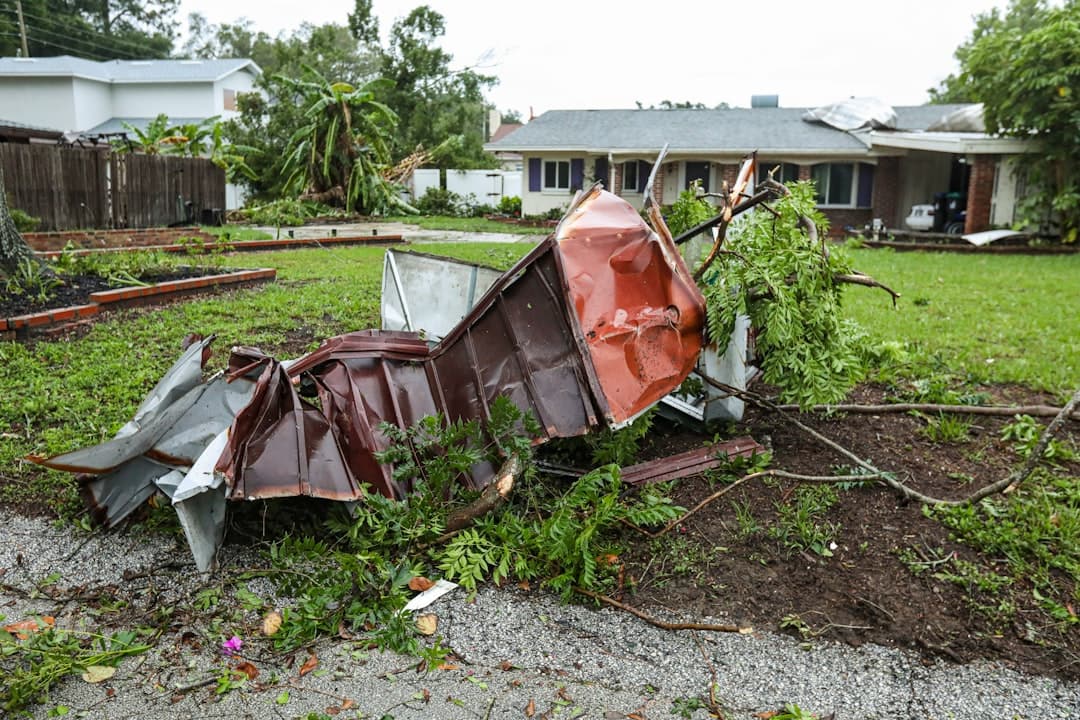
Thousands of Florida homeowners are caught in a situation that existing foreclosure guidance does not fully address: their home sustained hurricane damage, their insurance payout was not enough to pay for repairs, and now they are behind on their mortgage with a property that is difficult to sell in its current condition. For these homeowners, the standard advice — sell before the auction, apply for a modification, find a cash buyer — all runs into the same wall: the damage.
This guide is specifically for homeowners in that position. It addresses what your options actually are when your home is damaged, your insurance claim is disputed or underpaid, and your mortgage servicer has sent you a notice of default or a lis pendens.
Why This Is Happening in Southwest Florida Right Now
The intersection of hurricane damage and mortgage default is most acute in Lee, Charlotte, Sarasota, and Manatee counties — the areas hit hardest by Hurricanes Ian in 2022 and Helene and Milton in 2024. Research published in mid-2026 found that foreclosure filing rates in Lee and Charlotte counties are running well above the Florida statewide average, with post-hurricane storm-damage insurance disputes cited as a primary driver.
The pattern is consistent across the region: a homeowner suffered damage, filed a claim, received an initial payout that covered only partial repairs, could not fund the shortfall out of pocket, and eventually stopped making mortgage payments to preserve cash. In the time it took for the insurance dispute to drag on — sometimes 12 to 18 months — the mortgage fell further behind, and now foreclosure proceedings have begun.
Compounding this is the broader Florida insurance crisis: statewide premiums have risen sharply over the past three years, and some homeowners facing damaged properties found that their renewed policies came with higher deductibles or reduced coverage. The August 2026 foreclosure data reflects this pressure statewide, with Florida posting the highest foreclosure rate in the nation.
Option 1: Sell the Home As-Is — Assigning the Insurance Claim
This is often the most practical path forward and the one most homeowners do not know is possible. You can sell a damaged Florida home before a foreclosure auction, and in many cases you can assign your open insurance claim to the buyer as part of the sale.
An insurance claim assignment means the buyer takes on the right to pursue and collect whatever your insurer still owes on the damage claim. For buyers — typically investors who are experienced with damaged properties — this is a known factor they can price into their offer. For you, it means you do not have to wait for the insurance process to conclude before selling.
The key question is whether a sale at an as-is price would generate enough to pay off your mortgage balance, any liens, and closing costs. If your home has equity even in damaged condition, a pre-foreclosure sale can pay off the mortgage and potentially leave you with proceeds. If the sale price would fall short of what you owe, you are looking at a short sale — which requires lender approval but is still achievable on a damaged property.
To understand whether a pre-foreclosure sale is viable, review what equity you need to sell in foreclosure and contact Barrett Henry at (813) 761-0133 for a free, confidential equity assessment that accounts for the as-is condition of your property.
Option 2: Short Sale on a Damaged Property
If your home is worth less than your mortgage balance — or if the damage has reduced its market value below your payoff amount — a short sale is worth pursuing. A short sale requires your lender to approve a sale price below what you owe, and in many cases lenders will waive the remaining deficiency balance as a condition of approving the sale.
Damaged properties do qualify for short sales. Lenders typically prefer a negotiated short sale over taking back a damaged property through foreclosure, since a foreclosure on a damaged home leaves the lender owning a property that requires repairs and carries liability. That dynamic works in your favor during the short sale negotiation.
The credit impact of a short sale versus a foreclosure is also meaningfully different: a completed foreclosure typically affects your credit report for seven years, while a short sale — reported as "settled for less than the full amount" — generally carries a smaller long-term penalty and shorter recovery timeline for future borrowing.
For damaged properties in Southwest Florida, a short sale specialist who understands both the insurance claim dynamics and the local market is essential. Contact help@flforeclosurehelp.com to discuss whether a short sale is the right fit for your specific situation.
Option 3: Loan Modification — Getting the Payments to a Number You Can Manage
A loan modification does not fix the damage, but it can reduce your monthly payment to a level that makes staying in the home financially possible — especially if you are close to resolving the insurance claim and expect to begin repairs soon.
Lenders can and do approve modifications on properties with unrepaired damage. The modification typically requires you to continue pursuing your insurance claim and to maintain the property to the extent possible. If your servicer has not yet evaluated you for a modification, submit a written loss mitigation application immediately and document every communication.
If your servicer is unresponsive or has been transferred — which happens frequently during foreclosure proceedings — the rights you have when your servicer transfers mid-foreclosure protect you from losing your position in the modification queue. Federal rules require your new servicer to honor any pending loss mitigation review.
A HUD-approved housing counselor can review your loan file and advocate directly with your servicer at no cost. Call 1-800-569-4287 to be connected with a counselor in your area.
Option 4: Deed in Lieu of Foreclosure
A deed in lieu means you voluntarily transfer the title of your property to the lender in exchange for being released from the mortgage obligation. Lenders may agree to a deed in lieu on a damaged property, particularly if they calculate that the cost of pursuing foreclosure exceeds the benefit of eventual title recovery.
The advantages of a deed in lieu include avoiding the formal foreclosure process, potentially negotiating for a waiver of any remaining deficiency balance, and having more control over the timeline of when you vacate the property. The disadvantage is that lenders often prefer short sales over deeds in lieu because a sale produces a known price and avoids the lender becoming a property owner with repair obligations.
If neither a sale nor a modification is viable, a deed in lieu is worth requesting in writing from your servicer, along with any relocation assistance that might be available.
What to Do About Your Insurance Claim Right Now
If your insurance claim was denied, underpaid, or is still unresolved, do not abandon it even if you are deep in the foreclosure process. A successful resolution of the insurance dispute could generate enough funds to catch up on the mortgage, make repairs that allow a conventional sale, or at minimum reduce the deficiency if the home does go to auction.
The general deadline for property insurance lawsuits in Florida is five years from the date of loss. For Hurricanes Helene and Milton, both of which made landfall in late 2024, homeowners have until late 2029 and late 2029 respectively to file suit — meaning there is still time to pursue a disputed claim through litigation or negotiation.
For guidance on handling a denied claim while navigating foreclosure, see what to do when your Florida insurance claim is denied during foreclosure. A public adjuster or property insurance attorney can reopen a claim, challenge the initial assessment, and negotiate a higher payout — and in many cases they work on a contingency basis, meaning no upfront cost to you.
What Not to Do
A few missteps are particularly common among homeowners in this situation and each one narrows your options significantly:
- Do not ignore the foreclosure complaint. You have 20 days to respond to a Florida foreclosure complaint after being served. Missing that deadline allows the lender to pursue a default judgment, which accelerates the timeline and removes several procedural protections. If you cannot afford an attorney, seek a free legal aid resource.
- Do not assume the damage makes your home unsellable. Investors regularly purchase damaged properties in Florida. The sale price will reflect the condition, but a sale that pays off your mortgage — or comes close — is better than a foreclosure auction.
- Do not fall for foreclosure rescue scams. Southwest Florida has seen a rise in companies and individuals promising to stop foreclosure through deed transfers or upfront-fee modification services. Review the red flags of Florida foreclosure rescue scams before working with any third party that is not a licensed REALTOR® or attorney.
- Do not stop communicating with your servicer. Silence is treated as abandonment. Even while pursuing other options, keep written communication open with your servicer and document every contact.
If Your Lender Refuses to Cooperate
Mortgage servicers are required by federal law to review any complete loss mitigation application and respond in writing. If your servicer is ignoring you, miscommunicating about requirements, or appears to be moving forward with foreclosure while your modification is under review — a practice known as dual tracking — you have the right to file a complaint.
The Florida mortgage servicer complaint process covers how to file with the Consumer Financial Protection Bureau, the Florida Office of Financial Regulation, and how those complaints can directly affect the pace of your foreclosure case. A formal complaint can trigger a servicer review that stalls foreclosure proceedings while a resolution is reached.
Talk to Barrett Henry Before the Auction Date Is Set
Barrett Henry, REALTOR®, works directly with Florida homeowners who are behind on their mortgage — including homeowners with damaged or partially repaired properties. Every conversation is confidential. Barrett can review your property's as-is value, walk through which options are realistic for your specific situation, and connect you with trusted foreclosure defense attorneys and HUD-approved counselors in Southwest Florida.
The best time to act is before a final judgment is entered. Call (813) 761-0133, email help@flforeclosurehelp.com, or visit the Get Help page.
Related Guides
- Pre-Foreclosure Home Sale Guide for Florida Homeowners
- Selling Your House As-Is During Foreclosure in Florida
- What to Do When Your Florida Insurance Claim Is Denied During Foreclosure
- Short Sale vs. Foreclosure: Credit Impact Comparison
- Deed in Lieu vs. Short Sale in Florida
- Florida Loan Modification Guide
- Florida's Foreclosure and Insurance Crisis
- Florida Foreclosure Rescue Scams: Red Flags to Watch For
- Free HUD Housing Counselors in Florida
- Florida Foreclosure Update: August 2026
This is general information, not legal advice. Foreclosure laws, insurance claim procedures, and loss mitigation options vary by lender, loan type, and individual circumstances. Consult a qualified Florida attorney and a licensed insurance professional for guidance specific to your situation.
Free Resources
- HUD-approved housing counselor: 1-800-569-4287
- HOPE Hotline: 1-888-995-4673
- FHA Resource Center: 1-800-225-5342
- Barrett Henry, REALTOR®: (813) 761-0133