St. Johns County has spent the past decade earning a reputation as one of Florida's most desirable places to live — high-ranked schools, newer housing stock, and communities like Nocatee and Ponte Vedra that attracted tens of thousands of households during the pandemic-era relocation boom. In 2026, that reputation is colliding with a financial reality that is showing up in foreclosure filing data.
St. Johns County is part of the Jacksonville metropolitan statistical area, which ATTOM ranked among the ten worst U.S. metros for foreclosure rate in H1 2026 — approximately 0.31 percent of housing units in the Jacksonville metro received at least one foreclosure filing in the first half of the year. For context, Florida's statewide rate of 0.27 percent was already the highest of any state in the country. The Jacksonville metro runs above even that elevated baseline.
This guide explains what is driving the increase, what it means specifically for St. Johns County homeowners, and what options remain for people who are behind or at risk.
The 2026 Data for St. Johns County and the Jacksonville Metro
The Jacksonville metro's 0.31 percent foreclosure rate in H1 2026 placed it fourth among the worst Florida metros — behind Punta Gorda (0.50%), Lakeland (0.48%), and Cape Coral (0.35%) — and in the top 10 nationally. Across the Jacksonville metro, foreclosure filings rose approximately 50 percent year over year in the first quarter of 2026, one of the fastest increases in the state.
Within that metro, St. Johns County carries its own specific data. The St. Johns Citizen reported that the foreclosure filing rate per 1,000 owner-occupied households in St. Johns County rose from 2.82 in 2024 to 4.15 in 2025 — a nearly 47 percent increase — and was approaching pre-pandemic baseline levels. By 2026, that trend has continued. Separately, News4Jax reported in September 2026 that evictions in St. Johns County reached their highest level in at least seven years, an upstream indicator of broader housing cost pressure that often precedes mortgage defaults.
For the larger Duval County picture — which dominates the Jacksonville metro filing volumes — see the Duval County Foreclosure Rate 2026 analysis.
What Is Driving Foreclosure Stress in St. Johns County
The pressures fueling foreclosure activity in St. Johns County reflect some Florida-wide patterns, plus a few dynamics specific to this county's growth trajectory.
Insurance Cost Increases
Florida's homeowners insurance crisis affects every county, but St. Johns homeowners face compounding risk. Coastal and near-coastal properties in Ponte Vedra Beach, Palm Valley, and along the Intracoastal have seen the steepest premium increases — particularly policies that now carry FEMA Risk Rating 2.0 flood insurance alongside wind coverage. The statewide average annual premium has surpassed $8,000. Because insurance is typically paid through the escrow account, every renewal increase raises the monthly mortgage payment without any change in the loan's interest rate. For homeowners who stretched to buy in 2021 and 2022, escrow shortfalls have pushed what seemed like a manageable payment to an unaffordable level.
For more on how insurance costs are driving Florida foreclosures heading into Q4, see Florida Insurance Costs and Foreclosure in Q4 2026.
The Remote Work Reversal
A significant share of the households that relocated to St. Johns County in 2020 to 2022 came specifically for remote work flexibility — the ability to live in a highly rated school district while working from home without commuting to Jacksonville or another metro. As employers enforced return-to-office policies through 2024 and 2025, some of those households faced a difficult calculation: either absorb a substantial daily commute to Jacksonville or Orlando, pay for a second housing location, or sell at a time when prices in some segments had softened from their 2022 peaks.
For households that also bought with adjustable-rate mortgages to access a lower initial payment, the ARM reset wave beginning in late 2025 has added further payment pressure on top of an already strained budget.
Property Tax Resets and New-Buyer Cost Shock
Florida's Save Our Homes cap limits annual property tax assessment increases to 3 percent for homesteaded properties — but only for the current owner. When a home sells, the assessed value resets to full market value. Buyers who purchased in 2021 and 2022, when St. Johns County values were at or near their peak, are now carrying property tax bills that are significantly higher than what prior owners paid. For a home that appreciated from $350,000 to $550,000 in two years, the new buyer's tax bill may be two to three times the previous owner's. This reset, stacked on higher insurance and potentially higher mortgage payments from an ARM adjustment, has created a triple cost pressure that is proving unmanageable for some households.
Areas of St. Johns County Under the Most Pressure in 2026
Foreclosure activity in St. Johns County is not uniform across its communities. The highest stress points tend to share specific characteristics.
- Nocatee and newer master-planned communities. These communities attracted buyers at peak prices in 2021 and 2022, often with FHA or low-down-payment conventional loans. Buyers with minimal equity and thin payment margins are absorbing insurance and property tax increases that were not part of the original purchase calculation.
- Coastal and Intracoastal communities.Ponte Vedra Beach, Sawgrass, and Palm Valley homeowners face the highest insurance costs in the county, particularly as NFIP flood policies reflect FEMA's Risk Rating 2.0 methodology. Owners who purchased expecting legacy flood insurance rates have faced sharp increases at policy renewal.
- St. Augustine proper and surrounding communities. The historic St. Augustine market attracted both primary buyers and second-home purchasers during the pandemic surge. Second-home owners who took on the carrying costs at peak prices are under particular stress as rental income has softened and mortgage payments have risen through escrow adjustments.
If you are behind on your mortgage in St. Augustine, see Behind on Your Mortgage in St. Augustine: What to Do. For the broader county process overview, see the St. Johns County Foreclosure Guide.
How the Foreclosure Process Works in St. Johns County
Florida is a judicial foreclosure state — every mortgage foreclosure must proceed as a civil lawsuit. St. Johns County cases are filed in the 7th Judicial Circuit at the St. Johns County Courthouse, 4010 Lewis Speedway, St. Augustine, FL 32084. Case records are searchable through the St. Johns County Clerk of Courts online portal.
Under federal mortgage servicing rules, your lender cannot file a foreclosure lawsuit until your loan is at least 120 days delinquent. Once you are served with the summons and complaint, you have 20 days to file a written answer with the court. Missing that deadline allows the lender to pursue a default judgment — which dramatically accelerates the timeline and eliminates many options. Florida courts cleared most of their pandemic-era backlog in 2023 and 2024, and cases are now moving at or near pre-pandemic speed. Nationally, ATTOM reported the average foreclosure timeline fell to 563 days in H1 2026 — the shortest since 2013. The practical implication: if you are in the foreclosure process, the clock is moving faster than it was three years ago.
For the full Florida-wide process breakdown and what to expect at each stage, see CFPB Regulation X 2026: New Loss Mitigation Rules for Florida Homeowners.
What Options Do St. Johns County Homeowners Have?
Loss Mitigation and Loan Modification
Your mortgage servicer is required under federal law to evaluate you for all available loss mitigation options before proceeding to a foreclosure sale. A complete loss mitigation application — not an informal request, but a full application with all required documentation — triggers a legal obligation for your servicer to review it. Submitting a complete application is one of the most effective steps you can take to buy time. For FHA-insured loans, the FHA loss mitigation waterfall provides a structured sequence of options including payment deferrals, partial claims, and modifications.
Reinstatement
Paying all past-due amounts — missed payments, late charges, and any servicer advances — reinstates your loan and stops the foreclosure. You retain the right to reinstate through five business days before the sale. If you have access to funds from family, retirement accounts, or other sources, reinstatement preserves your home without requiring any lender approval.
Selling Before the Auction
For St. Johns County homeowners with equity, a pre-foreclosure sale is often the strongest available outcome. You can sell your home during active foreclosure as long as a final auction date has not passed. With St. Johns County home values remaining relatively stable compared to some other Florida markets, many homeowners have meaningful equity that can be preserved through a timely sale. A REALTOR experienced in pre-foreclosure situations can assess your equity position, price the home appropriately given the timeline, and manage the transaction to your lender's payoff deadline.
Short Sale
If you owe more than your home is worth, a short sale — where your lender agrees to accept less than the full balance — is typically far better than a completed foreclosure. It limits or eliminates deficiency judgment risk, causes significantly less credit damage (typically three to four years to recovery vs. seven years for a foreclosure), and gives you control over the timeline. For specialist help with short sales in the Jacksonville area, see the Jacksonville Short Sale Specialist page.
Chapter 13 Bankruptcy
Filing Chapter 13 triggers an automatic stay that halts all collection activity including foreclosure proceedings. Chapter 13 allows you to cure mortgage arrears over a three- to five-year repayment plan while keeping your home. See Chapter 13 Bankruptcy to Stop Foreclosure in Florida for how this works and when it makes sense.
Free Resources for St. Johns County Homeowners
You do not have to navigate this alone. Several free resources are available specifically for homeowners in the St. Johns County area:
- HUD-approved housing counselors — Free, confidential help with servicer negotiations and loss mitigation applications. Call 1-800-569-4287 or the HOPE Hotline at 1-888-995-4673 (24 hours). See Free HUD-Approved Housing Counselors in Florida.
- Northeast Florida Legal Aid — Free legal representation in foreclosure cases for income-qualifying St. Johns County residents.
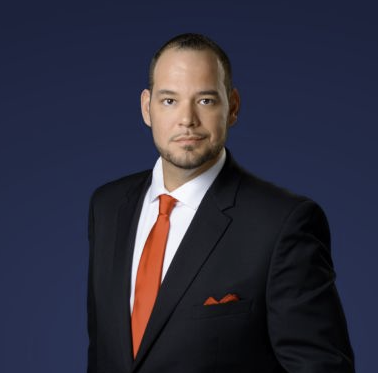
- Barrett Henry, REALTOR®, REMAX Collective — Free, confidential consultations on pre-foreclosure sales, short sales, and options for homeowners across St. Johns County and all of Florida. Call (813) 761-0133 or email help@flforeclosurehelp.com.
Legal Disclaimer: This content is for informational purposes only and does not constitute legal or financial advice. Foreclosure laws, program availability, and timelines can vary by lender, loan type, and individual circumstances. Consult a licensed Florida attorney or HUD-approved housing counselor before making decisions about your specific situation.
Related Resources for St. Johns County Homeowners
- St. Johns County Foreclosure Guide: Timeline, Courthouse, and Options
- Behind on Your Mortgage in St. Augustine: What to Do
- Duval County Foreclosure Rate 2026: Jacksonville Among Worst U.S. Metros
- Clay County Foreclosure Guide
- Florida Foreclosure Rate 2026: Statewide Overview
- ARM Mortgage and Foreclosure in Florida
- FHA Loss Mitigation Waterfall 2026: Florida Homeowners
- Free HUD-Approved Housing Counselors in Florida
- Get Free Foreclosure Help from Barrett Henry
Facing foreclosure in St. Johns County or anywhere in Florida? Barrett Henry, REALTOR® at REMAX Collective, offers free, confidential consultations with 23+ years of experience. Get free help today — no cost, no obligation.